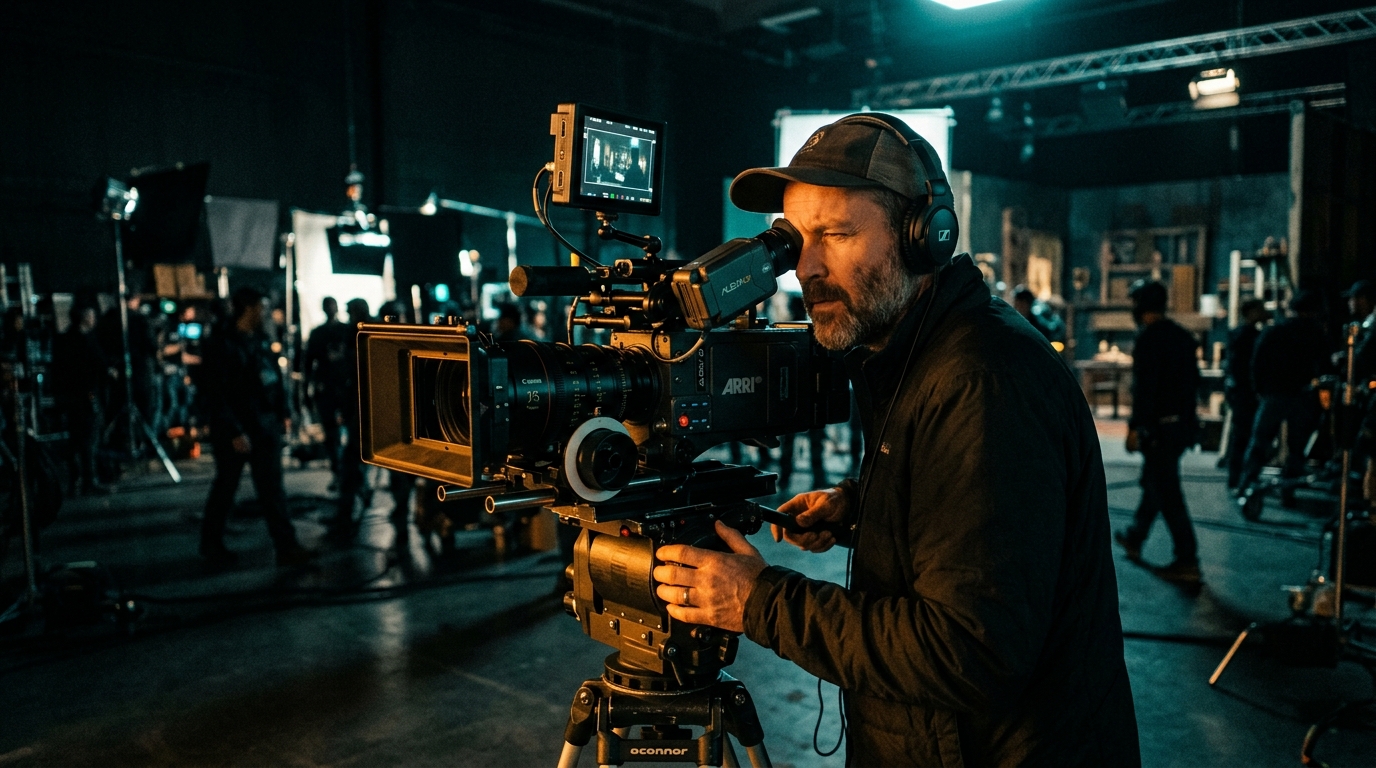
The Vision Before the Camera
Before talking about equipment, locations, or budgets, there is a fundamental moment: the construction of the vision. What do we want the audience to feel? What story are we telling, and from what perspective? These questions are not answered on the day of the shoot — they are answered weeks before, in honest conversations between the client and the creative director.
The vision is the filter for every decision that comes after. When it is clear, every technical and aesthetic choice has a reason to exist. When it is not, the shoot becomes a costly improvisation.
The director who arrives on set without a clear vision is not directing — they are reacting.
The Shot List as Architecture
The shot list is not a bureaucratic document. It is the visual translation of the narrative: every shot has its angle, its lens, its duration, and its emotional purpose. A good shot list anticipates problems before they occur on set and turns the shoot into the execution of a plan, not the search for one.
Producing without a shot list is improvising with the client's budget. In a professional production, improvisation should be a creative tool of last resort — not the standard way of working.
The Team as an Extension of the Concept
Choosing the right production team is a creative decision, not merely a logistical one. Every Director of Photography brings a different sensitivity. Every make-up artist builds a character from a particular perspective. Every sound technician hears the world in a unique way.
The creative director does not only coordinate — they integrate. They translate the vision into a language that every team member can execute from their specialty without losing the coherence of the whole. A team aligned with the vision produces with a fluidity that no budget can buy.
The Location as a Character
The space where a scene unfolds is not the background — it is an active participant. The texture of a wall, the direction of natural light, the ambient sound surrounding a space: all of it contributes to the narrative in ways the viewer feels even if they cannot articulate it.
Choosing a location is a dramatic decision. Rejecting a location that "looks good" but doesn't serve the story is one of the most valuable decisions a director can make. Coherence between location and narrative creates credibility. Incoherence, even when invisible to the viewer, creates a discomfort that undermines emotional connection.
Pre-Production as an Investment
Every hour invested in pre-production multiplies into efficiency during the shoot. Dead time on set costs money. Improvised changes in direction cost narrative cohesion. Poorly scouted locations cost missed opportunities to tell the story better.
Pre-production is not an expense — it is the investment that protects everything that comes after. When the shoot begins and everything flows with precision, it is not magic. It is the direct consequence of the invisible work that no one sees: the work that happened before the first camera turned on.